
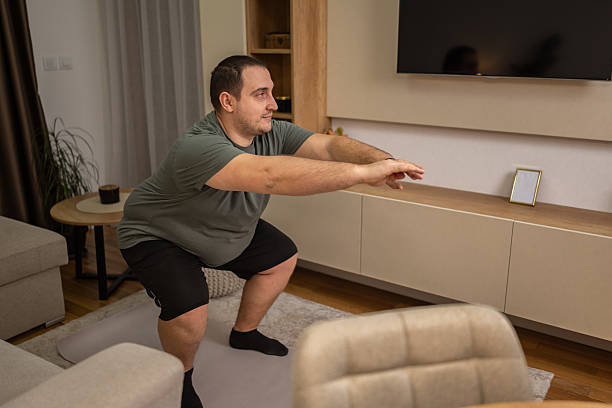
Removemove.ddd is a fitness education studio in Invercargill, New Zealand. We run live and streamed masterclasses that teach bodyweight exercise technique for home practice — from $14 NZD per streamed session.
View Classes & PricingWhen you push, pull, squat, and hinge using only your own body mass, every rep asks more of your nervous system than a fixed gym machine ever could. Machines guide the bar along a single track, which means your smaller stabilising muscles — the ones wrapping your spine, hips, and shoulders — can switch off. Bodyweight work reverses that. A single-leg Romanian deadlift forces your gluteus medius to fire to stop your pelvis dropping. A slow push-up with full range asks your serratus anterior to stabilise your shoulder blade.
Research published in the Journal of Strength and Conditioning Research has consistently shown that closed-chain exercises (where your hands or feet stay fixed) produce higher co-contraction of agonist and stabiliser muscles compared with open-chain machine alternatives. That matters for everyday life: carrying groceries up Tay Street steps, gardening on a Southland weekend, or simply standing up from the sofa without using your hands.
Our masterclasses break each pattern into progressions so you start where you are — whether that is wall push-ups or pistol squat negatives — and build from there. No pressure, no comparison. Just clear cues, breathing rhythms, and a warm, home-friendly atmosphere.
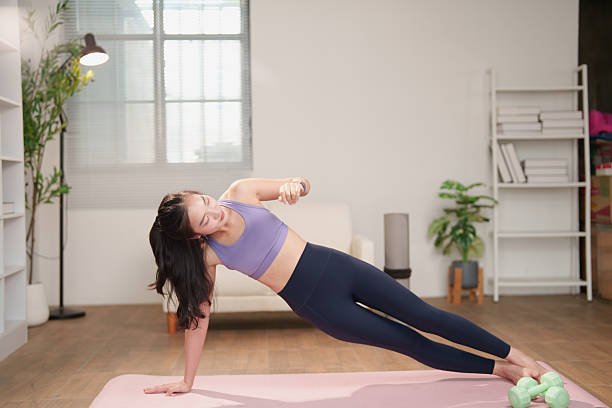
These small, deep muscles rarely get headlines, yet they hold your joints steady while bigger muscles generate force. Bodyweight training is a practical way to engage them during everyday movement.
Think of this as your internal weight belt. During bird-dogs and dead bugs, it fires before your limbs move, stiffening your trunk so your lower back stays neutral. Planks alone often miss this timing — slow, controlled extensions do not.
Located on the side of your hip, it stops your knee collapsing inward when you lunge or single-leg squat. Clamshells and lateral band walks help, but single-leg bodyweight squats demand it under real load — exactly what walking on uneven Kiwi footpaths requires.
Four small shoulder muscles keep the ball of your humerus centred in its socket. Pike push-ups, scapular push-ups, and bear crawls load these tissues through ranges machines rarely replicate, especially when your hands are on an unstable surface.
Proprioception — your sense of where your body is in space — can develop when you remove external guides. Without a machine telling your joints where to go, your brain maps each movement in real time. Research on motor learning suggests that attention-directed training may support neuromuscular engagement over repeated practice sessions, though individual responses differ.
In our classes we use tempo cues: a four-second lowering phase on push-ups, a two-second pause at the bottom of a squat, exhaling as you rise. These are not tricks — they give your nervous system time to recruit the right fibres in the right order. Over weeks, movements that once felt clumsy start to feel automatic, which is your brain building a cleaner motor programme.
Many members tell us the biggest shift is not strength but awareness: noticing when their shoulder creeps toward their ear during a plank, or when they hold their breath during a lunge. That awareness carries into daily posture, desk work, and sleep position.
Learn About Mind-Muscle TrainingGeneral lifestyle areas that research and our members associate with regular movement — not guaranteed outcomes.
Pick a common household item and see a suggested exercise adaptation. Practical ideas for home practice — use sturdy items and move at your own pace.
Each 45-minute live session runs from our Invercargill studio and streams to members across New Zealand. All levels welcome.
Master squat, hinge, push, pull, and carry patterns with regressions and progressions. Ideal if you are returning to movement after a break or building confidence before harder skills.
Anti-rotation presses with a towel, Copenhagen plank progressions, and slow Turkish get-up segments. Deep focus on trunk control and breath under load.
Timed rounds of burpees, jump squats, push-up variations, and skater hops with built-in rest ratios. Scalable intensity — work at your own pace within the clock.
Move with care. These principles apply to every session, whether you join us live or practise along with a recording.
If you have an existing health condition, recent injury, or have not exercised in a long time, speak with a qualified health or exercise professional before starting a new programme. Our content is educational, not personalised guidance.
Spend five to eight minutes raising your heart rate with marching, arm circles, and hip openers. Cold muscles are less responsive and more prone to strain. Southland mornings can be chilly — layer up until you are warm.
Keep water nearby. Even indoor sessions cause fluid loss through breathing and sweat. Sip between sets rather than gulping large amounts mid-exercise.
Sharp pain, dizziness, chest discomfort, or unusual shortness of breath are signals to pause immediately. Mild muscle fatigue is normal; joint pinching or radiating pain is not. Rest and reassess.
Live sessions and community meet-ups at 77 Tay Street, Invercargill. Times are NZST.
| Date | Event | Time | Format |
|---|---|---|---|
| 14 June 2026 | Foundation Flow Masterclass | 6:30 PM | Live + Stream |
| 21 June 2026 | Core & Stability Lab | 9:00 AM | Live + Stream |
| 28 June 2026 | Household Fitness Workshop | 10:30 AM | In-Person |
| 5 July 2026 | Metabolic Circuit | 6:30 PM | Live + Stream |
| 12 July 2026 | Open Movement Q&A | 11:00 AM | In-Person |
No. Every session is designed around bodyweight movements. Occasionally we suggest optional household items — a chair, towel, or water bottle — but these are never required. A clear floor space about two metres square is enough.
Yes. Our Foundation Flow class is built for people starting from scratch. Instructors demonstrate easier versions of every exercise, and you control the pace. There is no expectation to keep up with anyone else.
Absolutely. Most masterclasses stream live to members across New Zealand. You need a stable internet connection and enough room to move safely. Recordings are available for 48 hours after each live session.
Two to three sessions per week is a sensible starting point for most people, with at least one rest day between harder workouts. Listen to your body — quality of movement matters more than quantity.